Tackling the Roan in a Winter Storm
My alarm went off at 4am, and I crawled out of bed to face the elements, and remind myself of why I so love the mountains. Downstairs I had meticulously prepared the essential gear I needed to survive and thrive in what I was about to be walking through. Wool socks, a wicking pullover sweater, tucked into my flannel lined jeans; a down jacket with my scarf tucked inside, along with insulated gloves; and for my outer layer, a fur lined trapper hat, the veritable rainier jacket, and my waterproof insulated snow hikers.
Halfway through the assembly of my outfit I weighed my options on camera equipment. I could take my Canon which had the best lenses, or my Pentax which operates fully manually without batteries. Expecting subzero temperatures, I could likely only have the Canon out for a few minutes before it got cold enough for the battery to lose the voltage needed to work the shutter. I also however, did not trust the lubricants in the Pentax to hold up. I decided to take my chances with the Canon and wrap it inside my coat, between my middle and outer layers, and not take it out until the perfect shot lay before me.
I picked Josh up along the way up the mountain, we were the only cars in the grocery store parking lot. No one else even felt it necessary to go outside in the valley, where temperatures were barely above 10 degrees F. We headed up the mountain with haste, as we knew we had to time this excursion perfectly and there would be great adversity along the trail.
Arriving at the trailhead, the stars were bright in the sky, and the lights of the cities in the distance flickered on the horizon. A parking lot at the trailhead that commonly overflows on sunny days in June had 2 cars in it. Opening the door of the car, we were immediately battered by heavy winds that howled in a way I had only heard in movies previously.
It is a good rule of thumb to be a little cold when the hike begins, and this was sufficiently true for us in spite of our abundant preparation and gear choices. We mounted headlamps, and put on our ice spikes as we began the all-to familiar trail that is considered a light workout in perfect conditions.
As we crossed the ridge and got up onto the higher balds, the wind was at our backs and gently pushing us upwards. Snow from the ground was drifting all around us, and dancing gleefully across the path ahead. I slipped a few times, but never faced any serious setbacks, even as we began the rock scrambles. I could see the sky becoming bluer and the stars beginning to dull, and I knew we had to continue pressing on as fast as possible.
By the time we reached Grassy Ridge Bald, we were exposed to the winds on both sides of the mountain, and were being tossed around by gusts. Our water bottles began to freeze solid at this point, so we stopped for a brief moment to finish as much as we could while we were able. That is when I saw the first orange of the day:
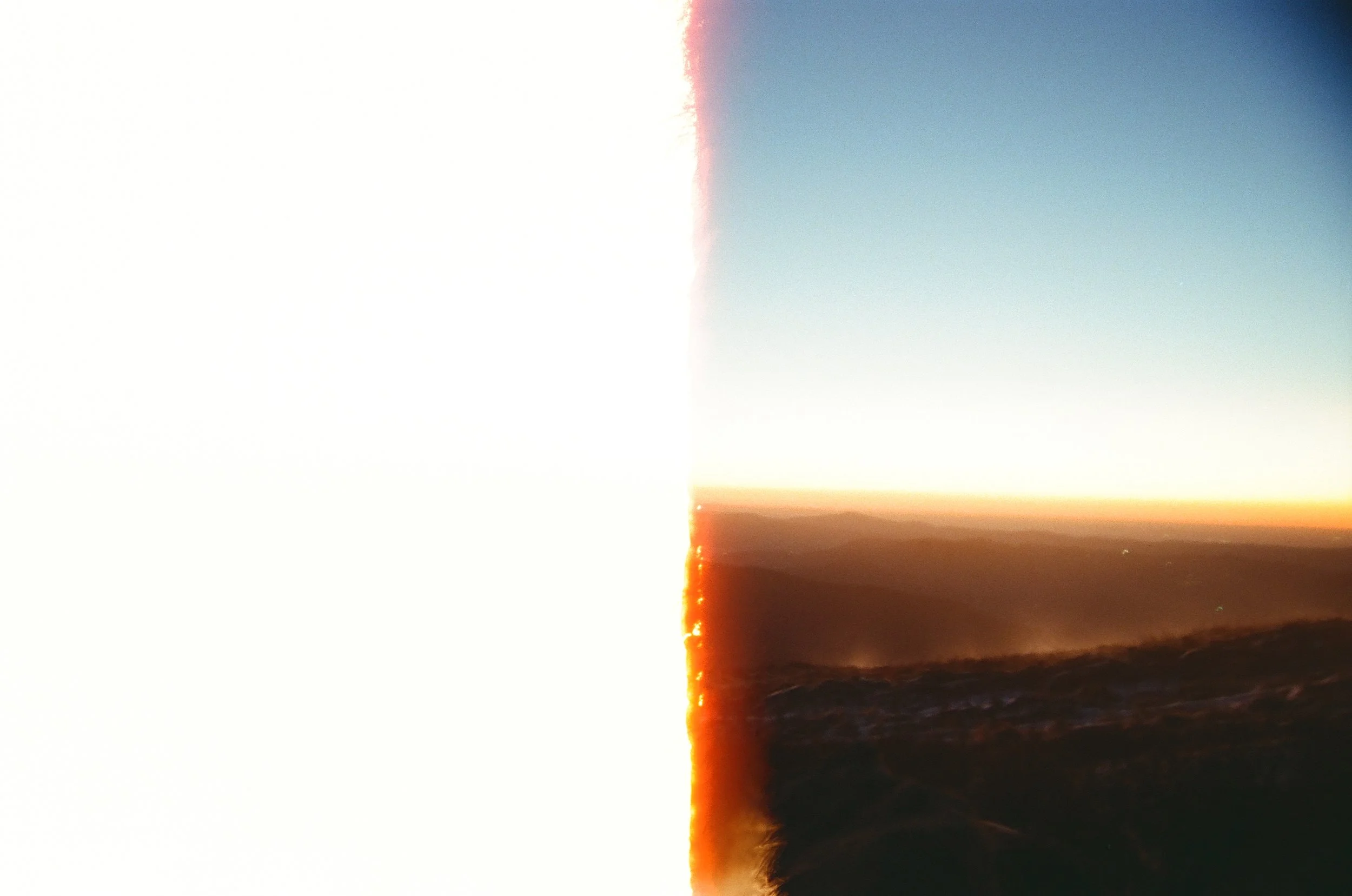
I spotted a tall enough rock to lean against, and braced myself as firmly as I could, because the winds were so intense they would blow the camera around while taking the long exposures. Here is what I was able to capture on my first shot:
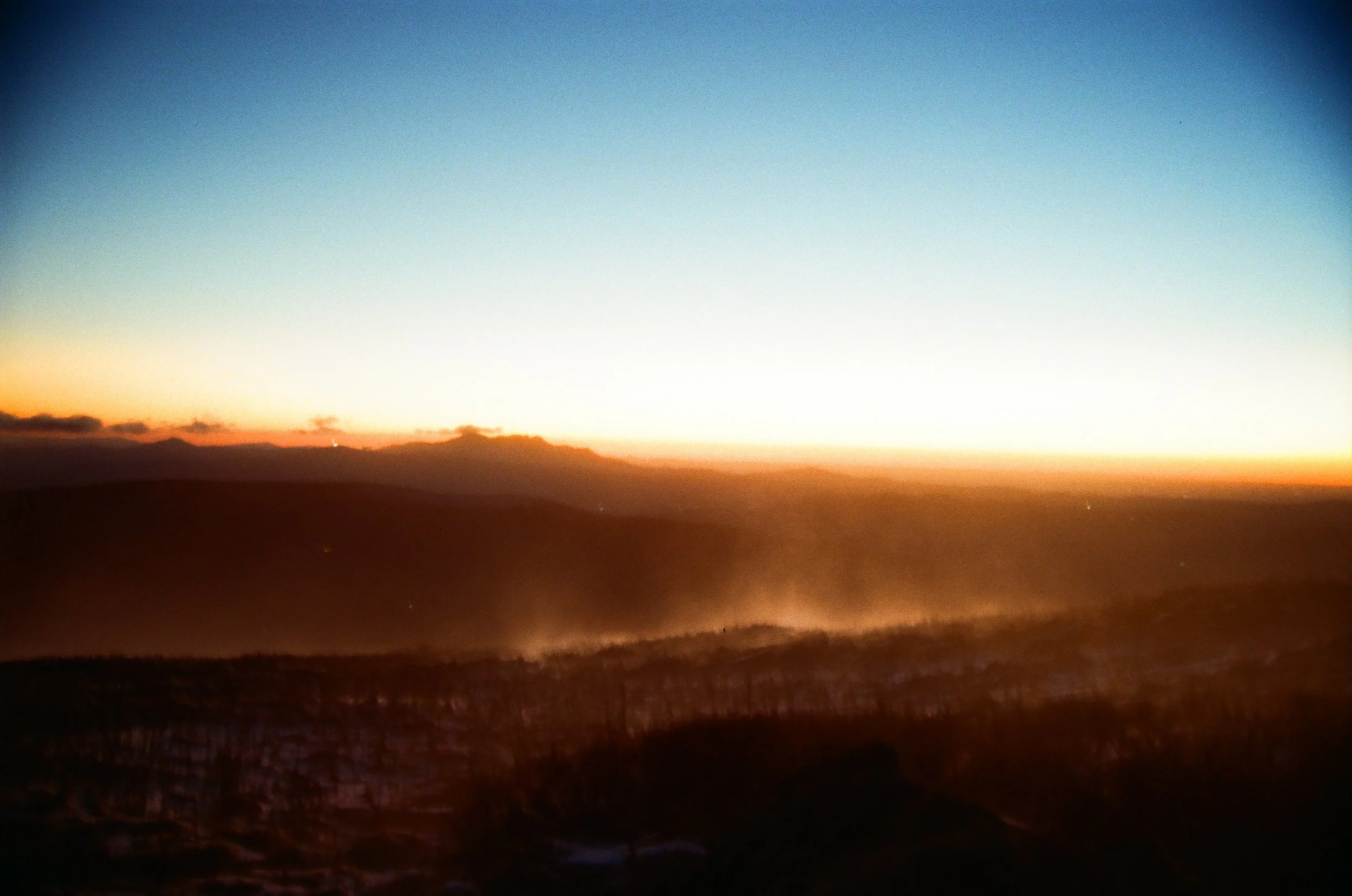
The first photo on a roll is usually partially burned from the loading process. Knowing this from prior experience, I lined up a second shot, but we had to move fast if we wanted to catch the grand view. The sun comes up fully in less than 15 minutes up here.
We pressed on, as I had no idea how long the camera could keep functioning in these conditions. We were in sight of our vantage point, and upon making the ascent, I immediately got to work.
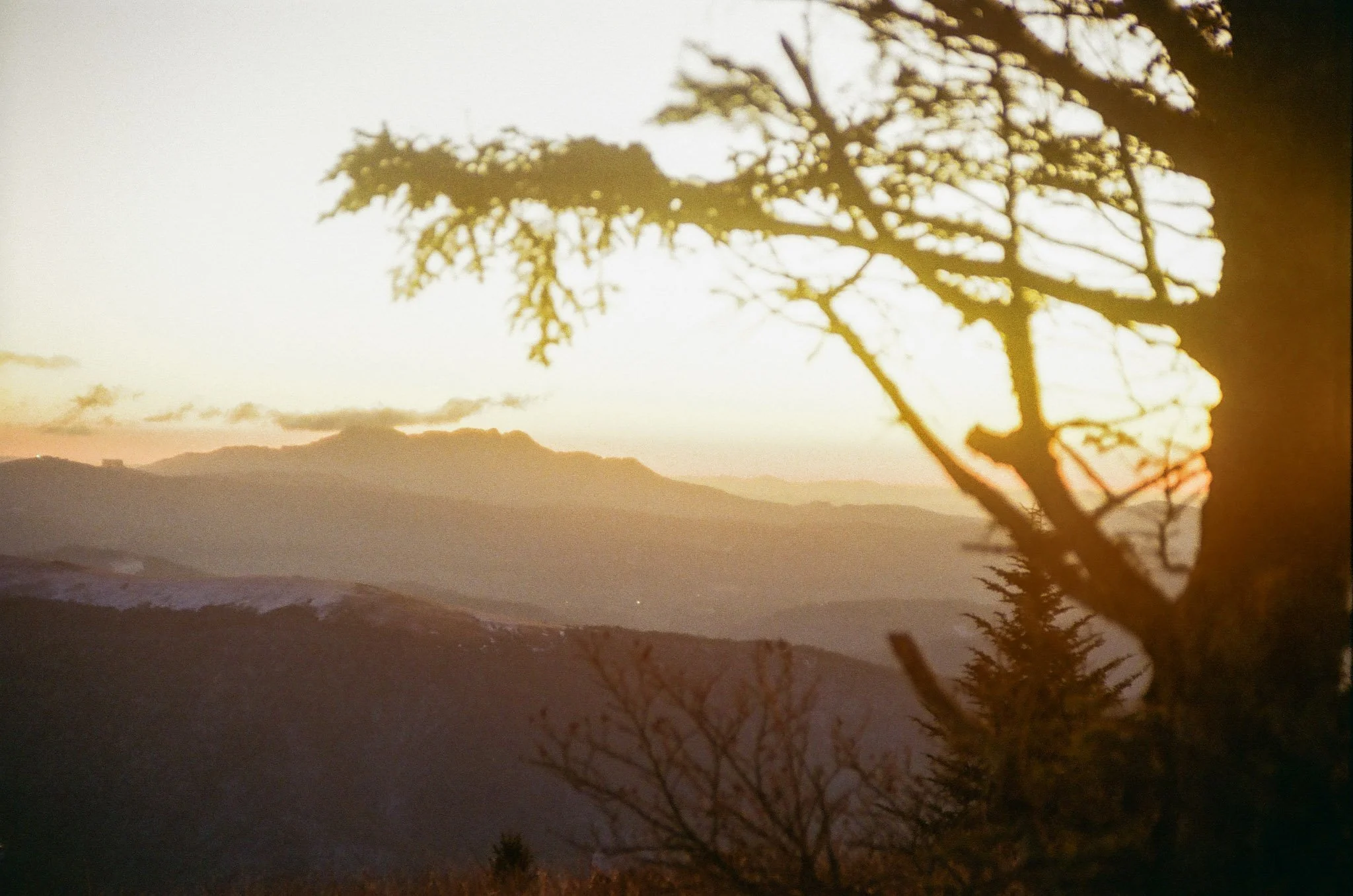
The sun rose rapidly over the Carolina Piedmont - Canon AE-1, FUJI 400
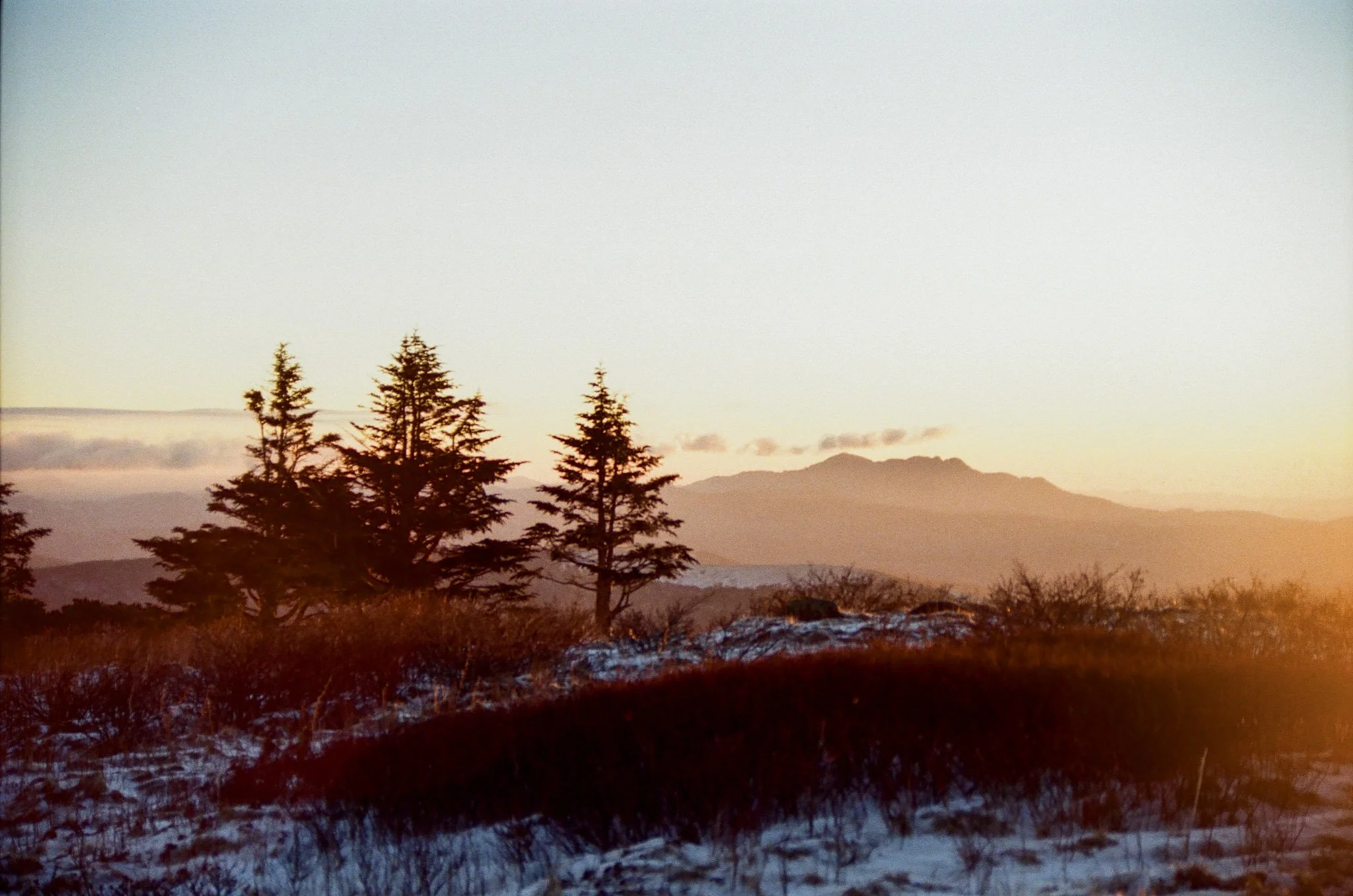
My favorite photo yet, a rediscovery of a scene I captured on digital several years ago, it took 5 tries to get right - Canon AE-1, FUJI 400
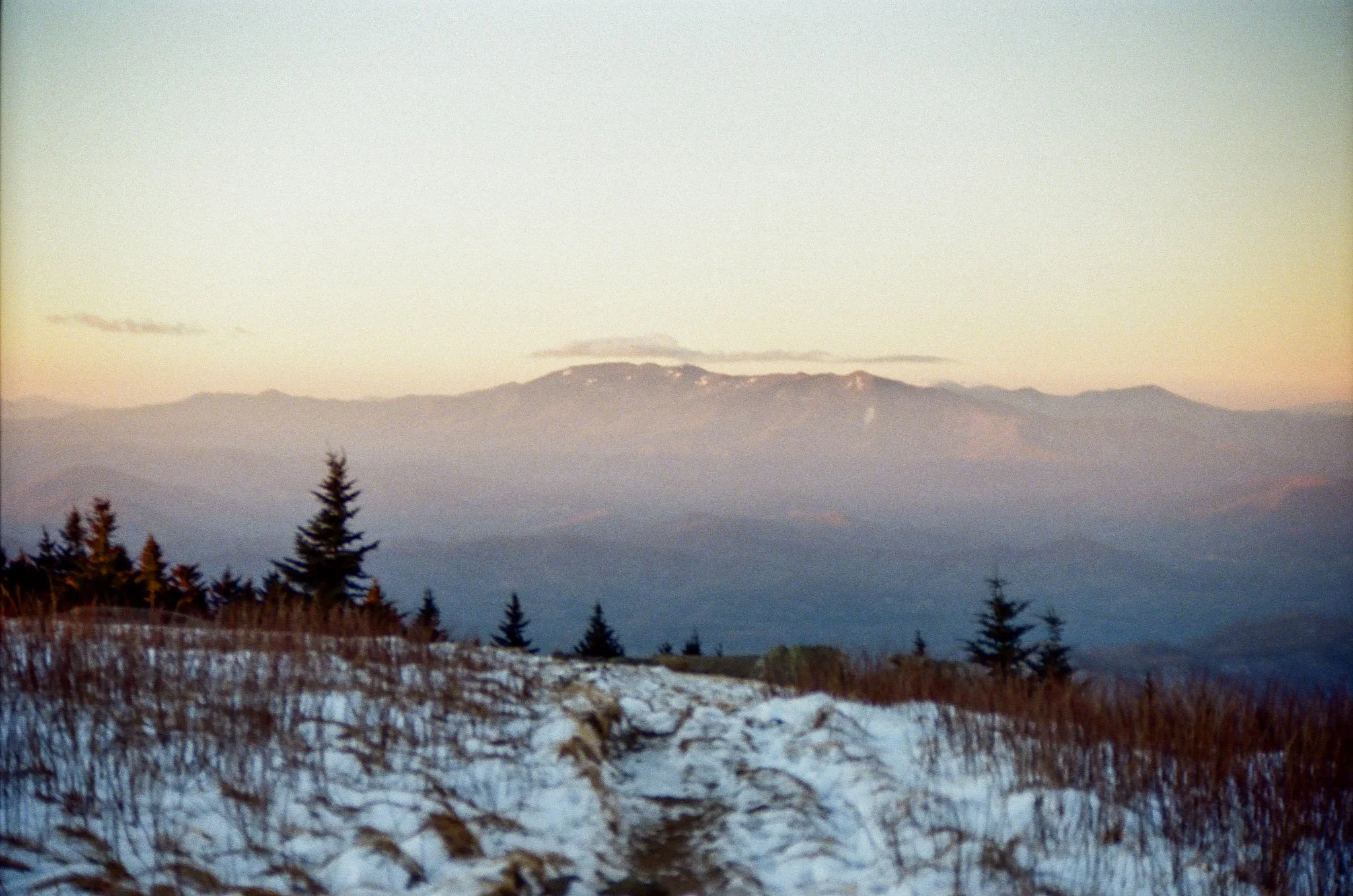
A gentle glow blankets the Black Mountain Range - Canon AE-1, FUJI 400
I took all these photos in a span of 10 minutes. We were beginning to get cold as we had stopped climbing, and the camera itself was beginning to accumulate with frost all on the outside of the body and lens. By the time I had taken about 25 pictures, the shutter began to groan and stick, hanging open longer than it needed to. I put it in my jacket for a few minutes and got it working just well enough to finish the roll.
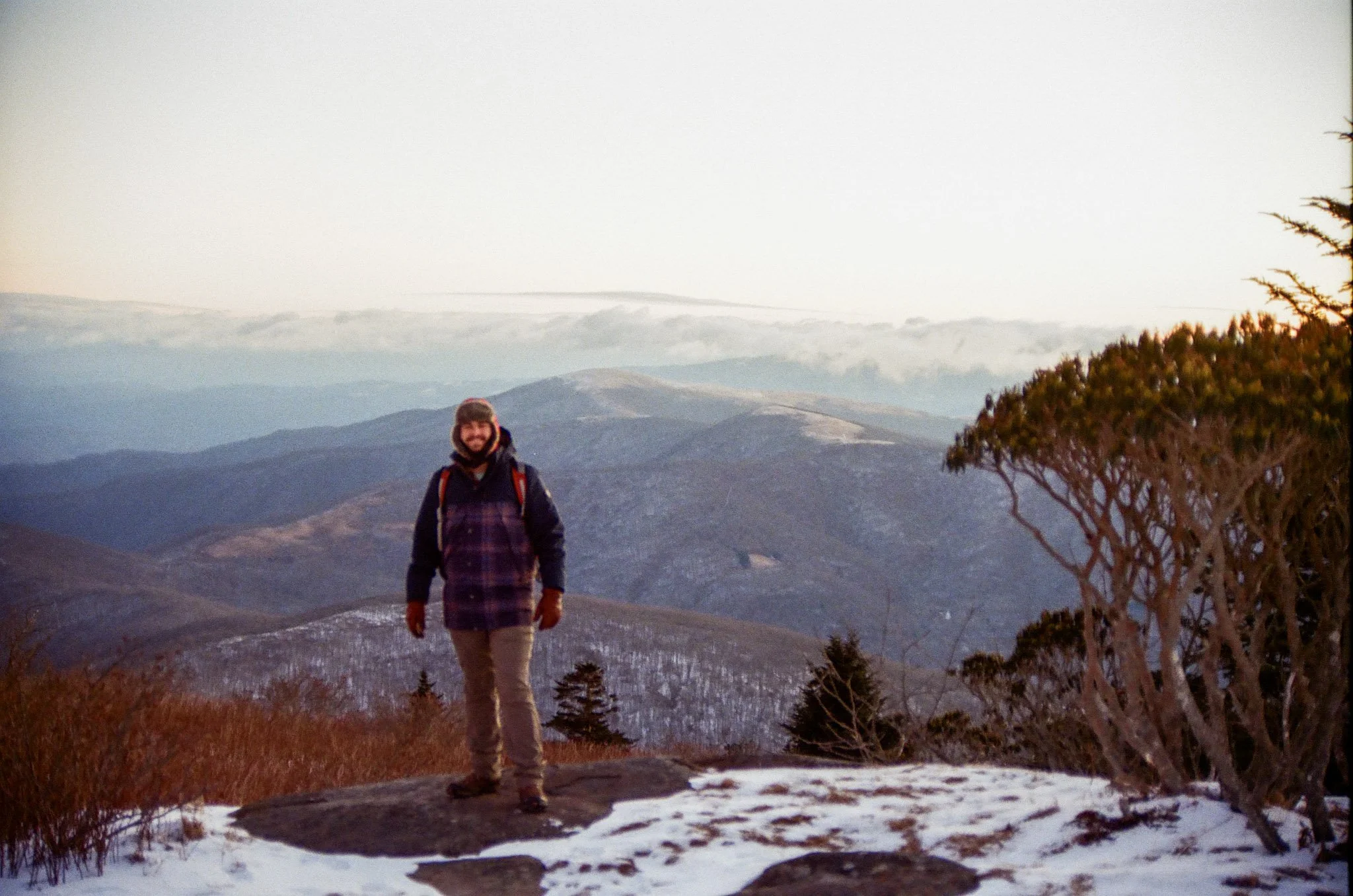
Josh, pictured in front of Hump Mountain - Canon AE-1, FUJI 400
Beginning our descent we were absolutely brutalized by the winds, now hitting us head on as we went back down the mountain. Our trek was cautious, having covered about 6 miles, yet we still made it back home before 10am, which is when we might wake up on a day less fascinating.
This was not the longest trip, nor was it to a new or unfamiliar place. It was made iconic by the conditions, and the demanding schedule of the sunrise. It felt like an expedition. If we were ill prepared, or ill equipped, we would have never succeeded. There is no forgiveness on film, I couldn’t adjust the sensors, or the ISO, I had to work with the constraints of the camera and film I was dealt, and throughout all this difficulty, I was able to accurately capture the image in front of me. I took the beautiful light display before me, and I burnt it onto a 35mm piece of film emulsion, with just enough skill to have captured the moment. This is one of my proudest shots, and represents a year of learning and a thousand shots of practice coming to fruition.