Imperfection
I’ve decided to add some texture to my journey of learning photography by sharing some of my more iconic mistakes. By using vintage equipment, my mistakes have consequences, which are displayed here:
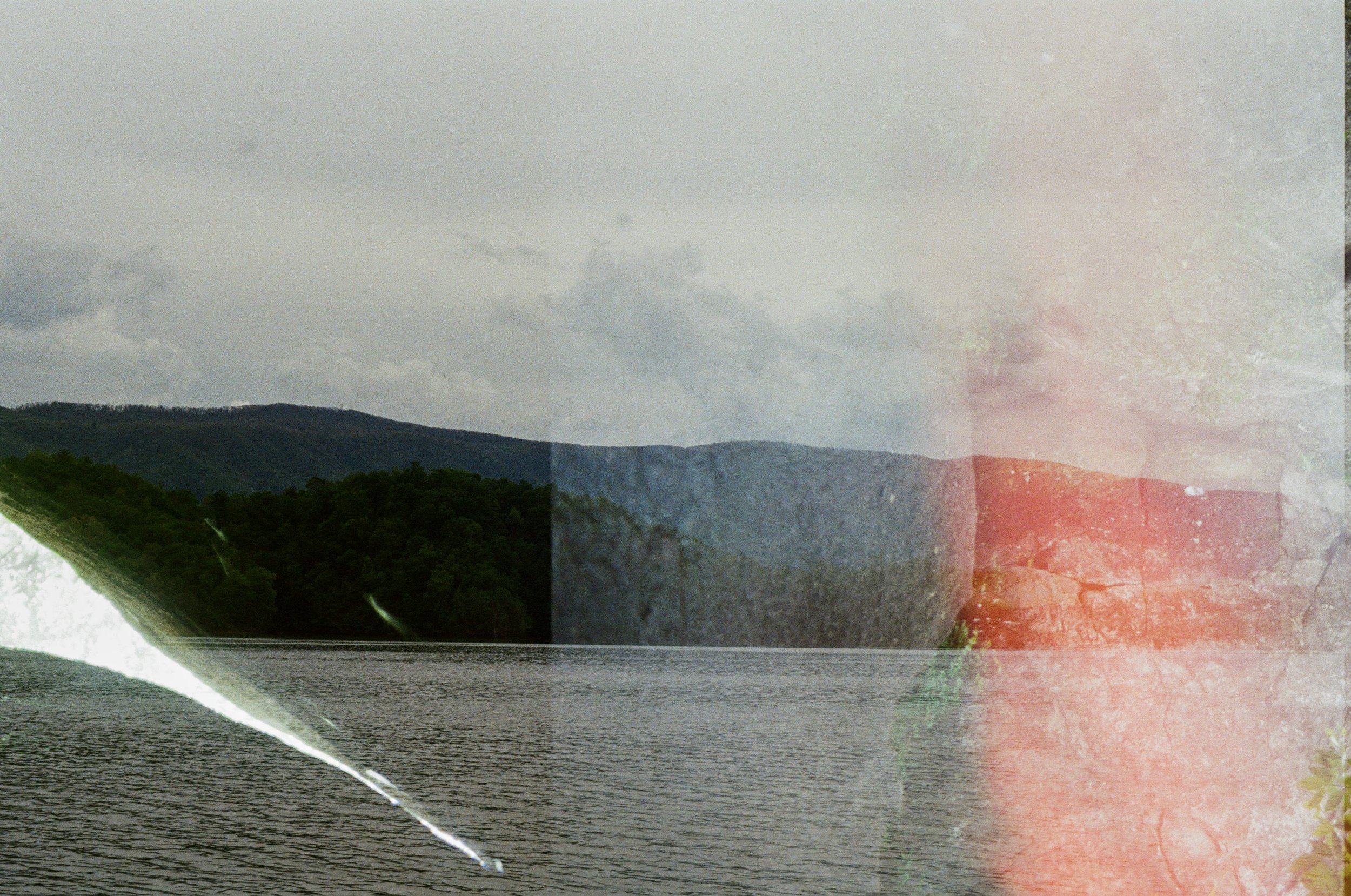
Accidental double exposure with light leaks. This is a multi-error. I reshot an already exposed roll of film, had a light leak in the camera used on either the first or the second round of shooting, and I underexposed both photos in my estimation.

Light leaks and water damage, from a canoeing accident. This photo teaches us a lot about the photographic process. Film itself makes images by an emulsion of chemicals reacting to light. If at any point the film is exposed to light, that light will react with the film. Rather than making a specific image, as if shot properly, the volume and intensity of direct sunlight completely blows out the film. In essence, the camera itself is merely a device that limits and focuses the light we perceive. When we flipped out of the canoe and I found myself swimming, the film was also completely washed out with river water, leading to the more visible blue streaks. After resurfacing I opened the camera back to drain the water, which annihilated about 5 or 6 images fully, yet only partially altered this one, making it the perfect example for study.
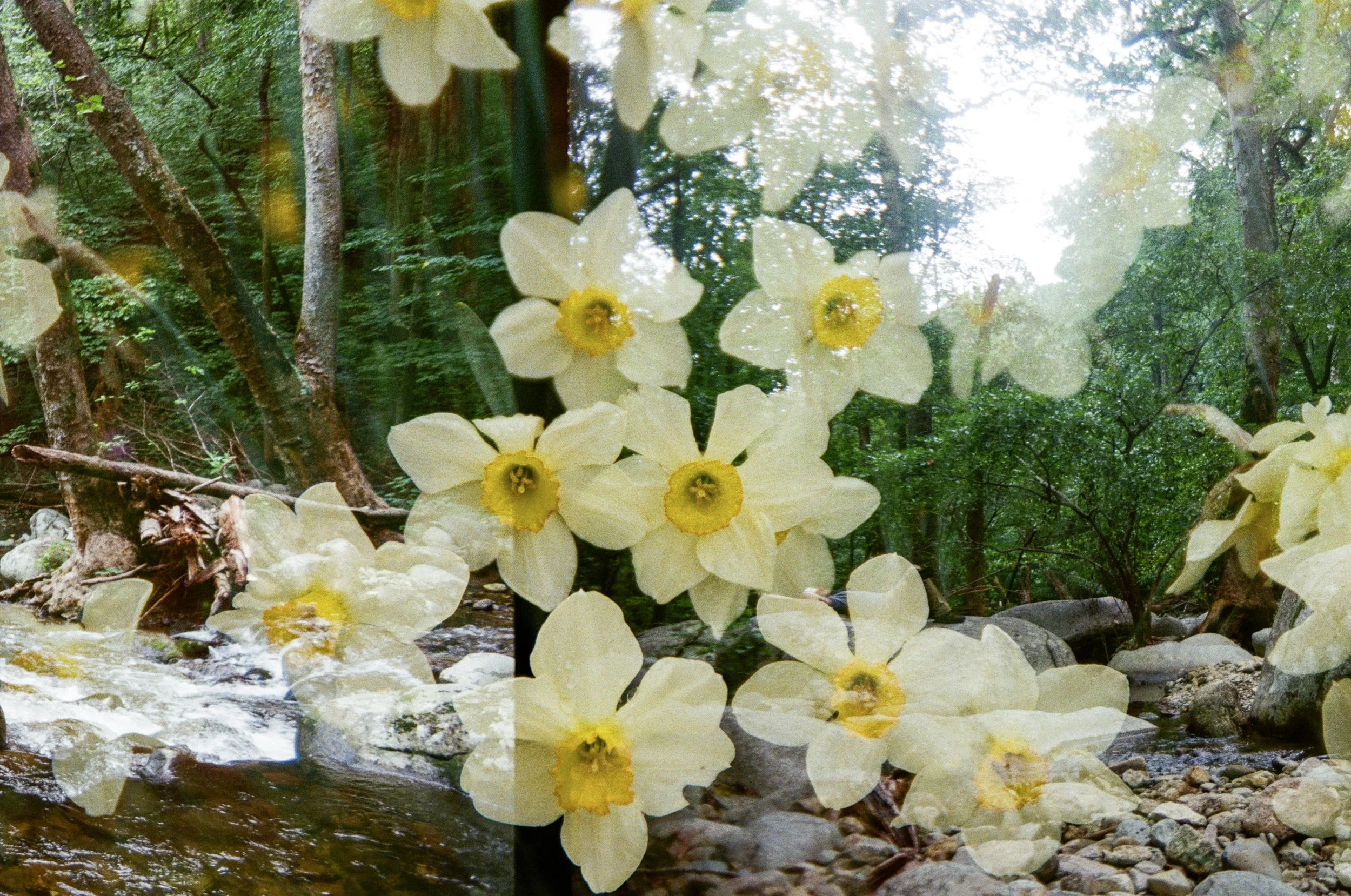
Double exposure from a film roll that was accidentally mistaken for an unexposed new roll. As we previously mentioned, film is more of a capture of light than anything else. What if we shot an entire roll of film, then reloaded it again, and shot a second set of images over that film? That would yield this result, both images superimposed onto each other, in a single composite. This example is the only one out of 36 that I felt made something more beautiful than if it hadn’t occurred. This is a technique I wouldn’t mind to explore further, albeit with even an ounce of intention.
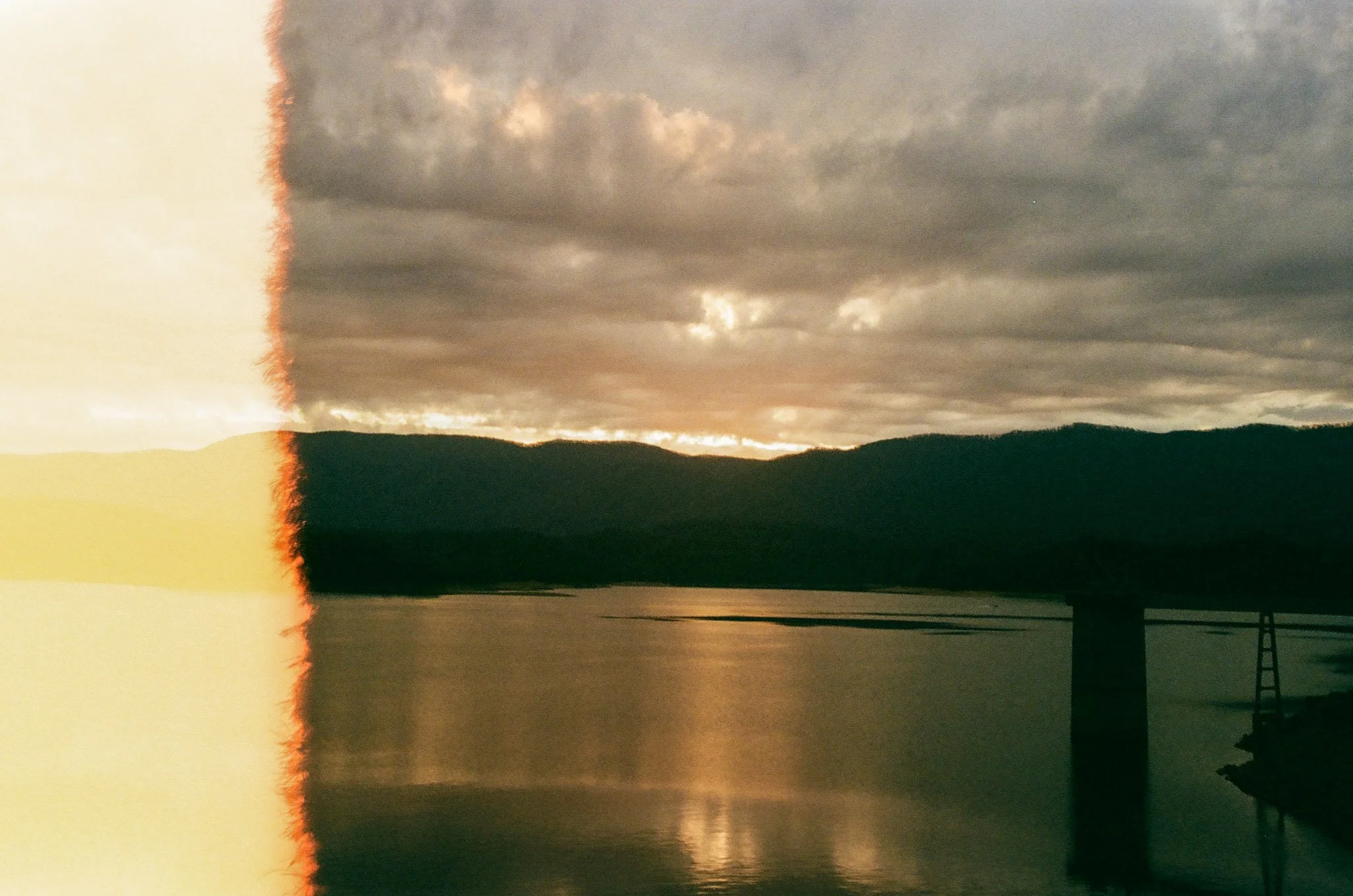
Underexposed on the right, and overexposed by a light leak on the left. This is the result of loading the film in more forgiving light, you can see that the left side is not totally white, as the film still had some latitude remaining. However, I also underexposed the actual shot, meaning not enough light was captured. In film photography, underexposed light loses details in the shadows that are not recoverable through editing, since the emulsion process is light dependent and the absence of light is essentially the absence of image.
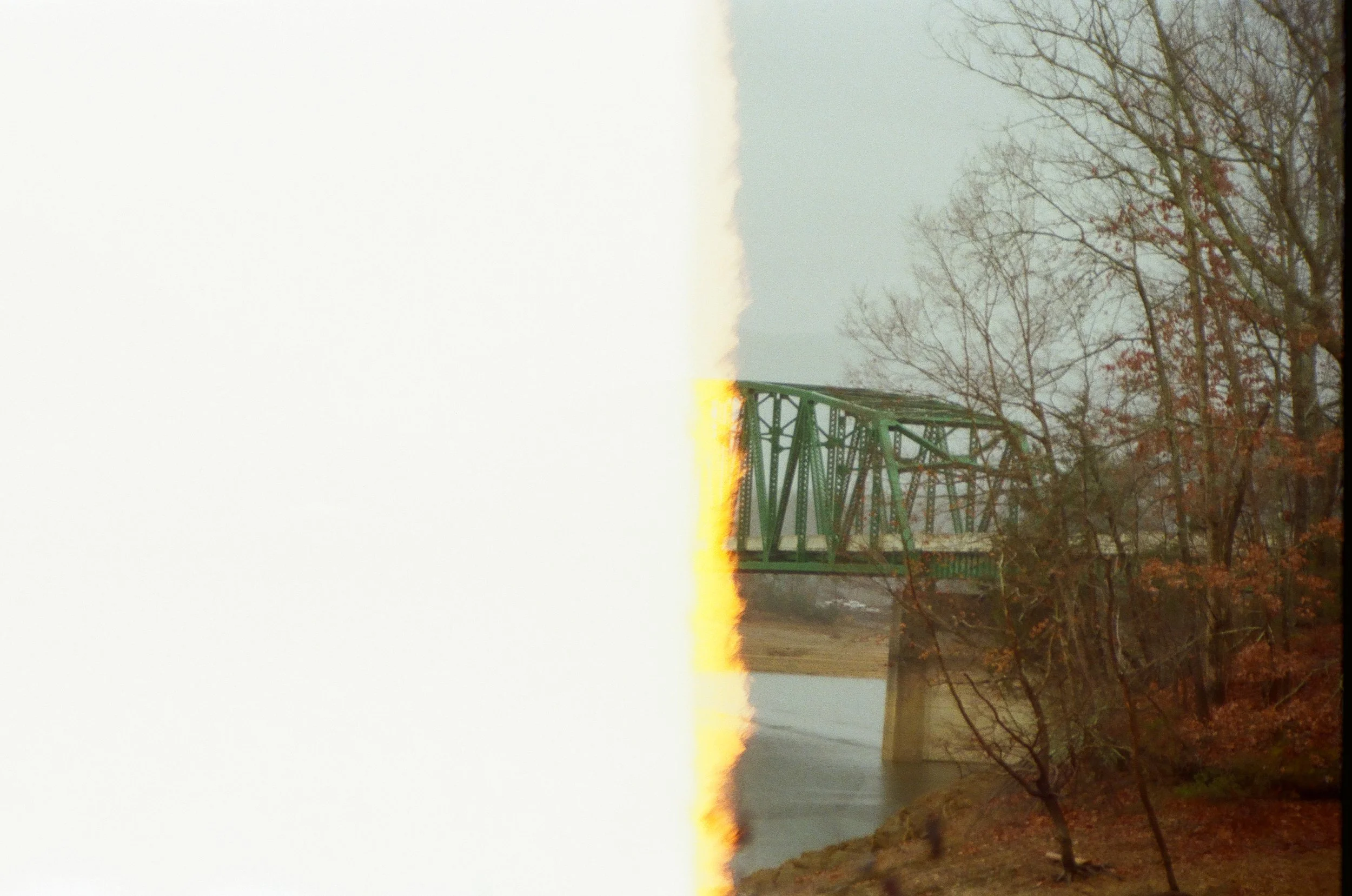
The first shot on a roll is typically burned from loading, in this case you can tell I loaded the camera in daylight conditions because the film is entirely exposed, bright white.
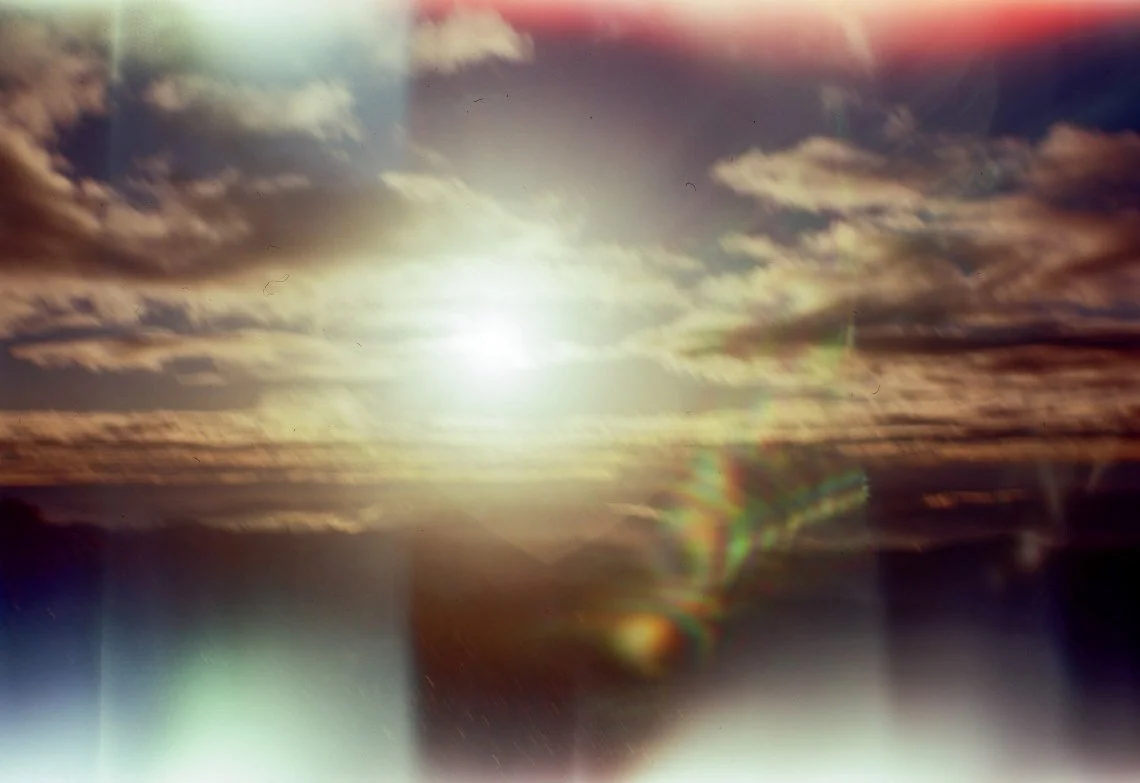
Taken on a folding bellows camera with 620 film, there was movement on a long exposure and generally horrible light placement. I am still to this day not entirely sure what happened here. This was a costly error as 120 medium format film only captures 9 images per roll at a massive resolution. This is a failure of fundamentals that is honestly due to my lack of familiarity with the camera itself. I found a variant of my Kodak Tourist model that accepts a shutter cable, so I can activate the shutter without moving the camera in the process. Compositionally, this is a great example of how what might be stunning to the eye can be limited by your abilities.
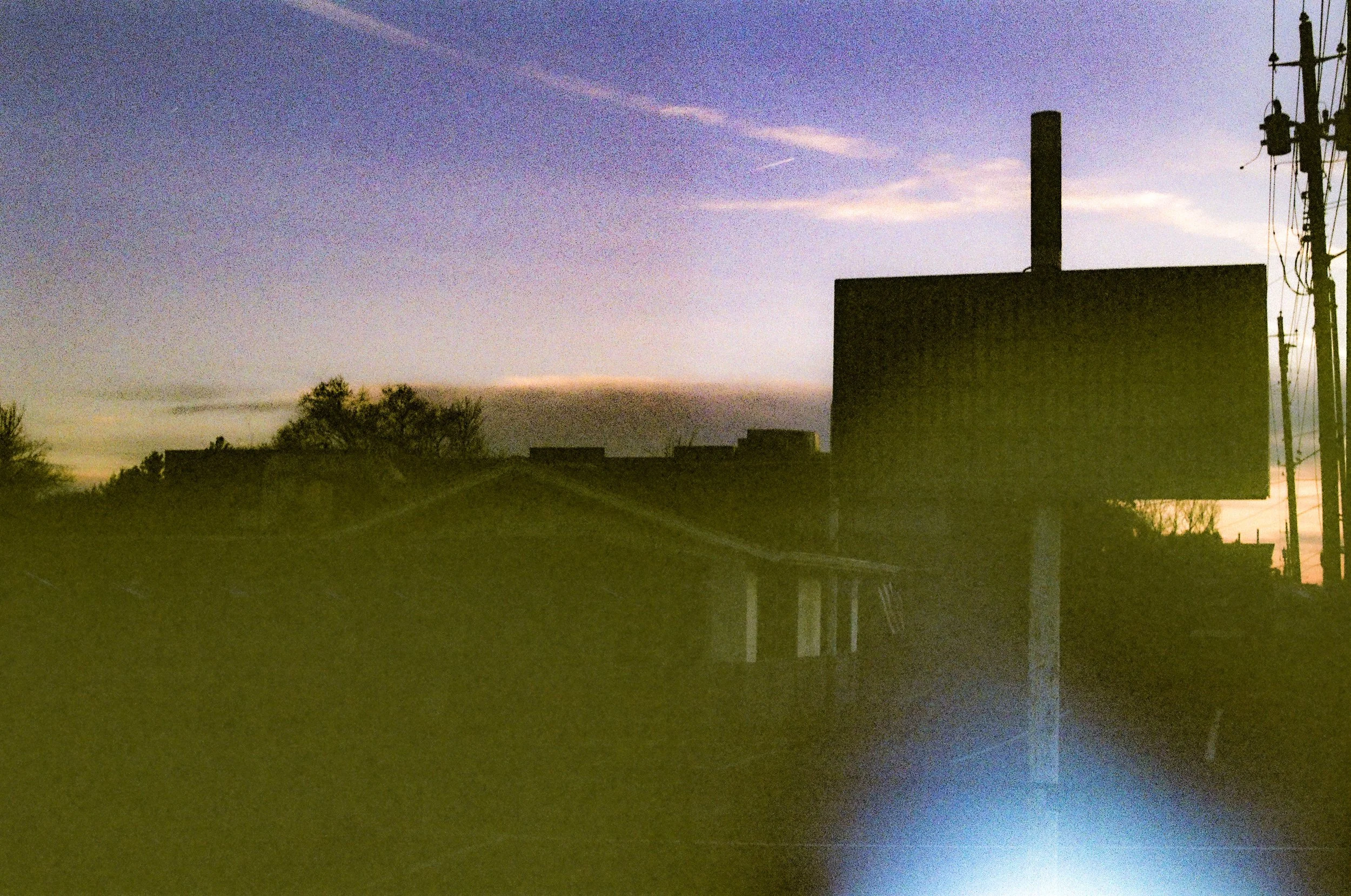
Underexposed and with a light leak. This was on one of my earliest rolls. I knew I had to keep the shutter speed high as I did not have a tripod at this point. However, this led to my having a lack of light on the subject. The detail is permanently lost, and the photo appears “muddy”. If aperture was at its limit, I could now take this photo using a shutter cable and tripod, or with enough foresight, a higher speed film.
Stay tuned for more failures! By immortalizing them here I am forced to confront and learn from them, unlike my thousands of nameless digital duds lost to time immediately when I did not like the results on the camera’s screen while shooting.